
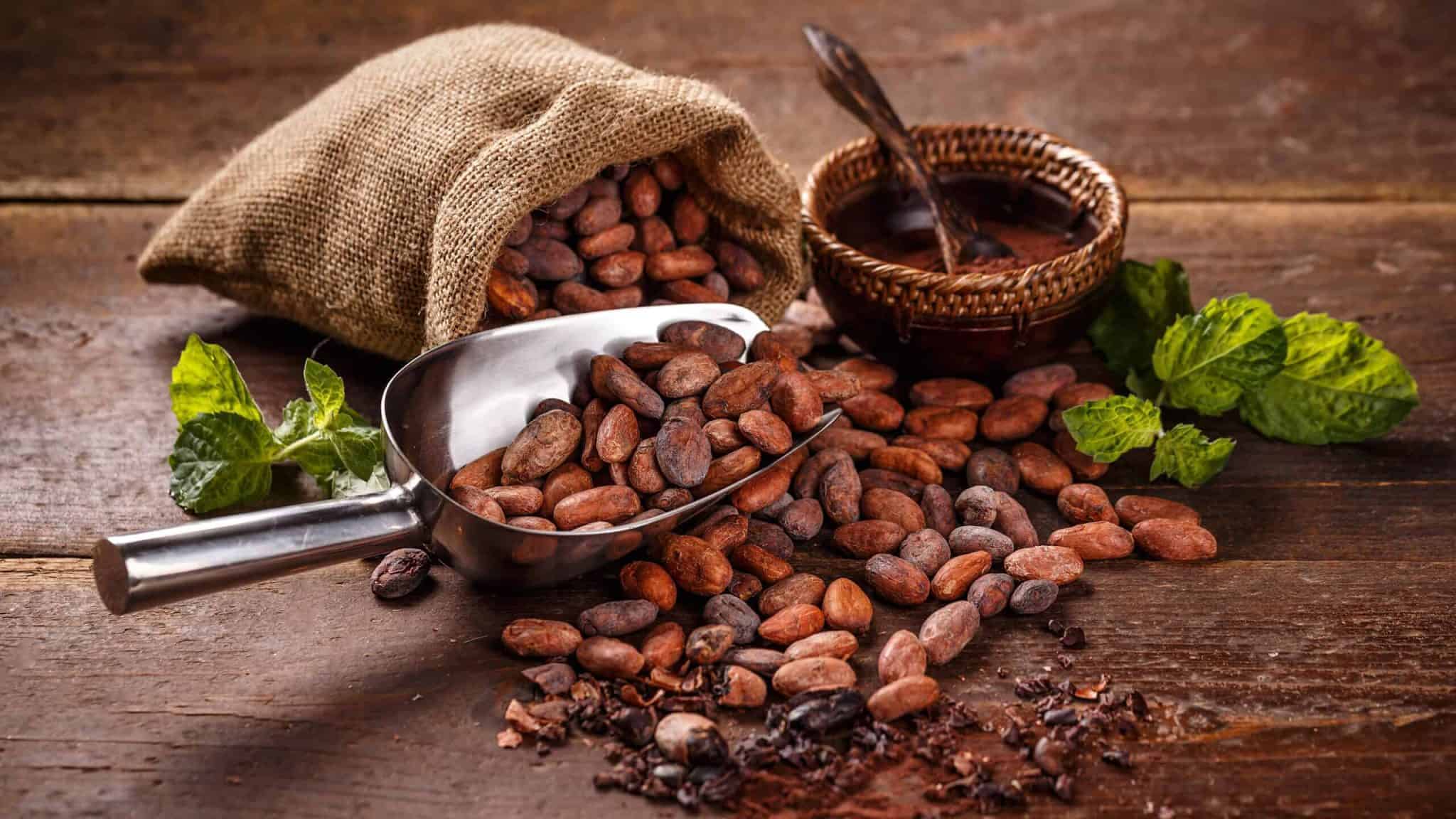
COCOA TYPES
Main Cocoa Bean Types
Forastero
• The most common variety, accounting for about 80% of global cocoa production.
• Grown in West Africa (Ghana, Côte d’Ivoire, Nigeria, Cameroon), as well as Ecuador and Brazil.
• Has a strong, slightly acidic flavour, suitable for bulk chocolate.
Trinitario
• A hybrid of Criollo and Forastero, representing around 10–20% of world cocoa.
• Cultivated in South America and the Caribbean.
• Milder than Forastero, with a slight acidity, but still stronger than Criollo.
Criollo
• A very rare variety, making up only 1–5% of global production.
• Grown in Venezuela, Mexico, Colombia, Cameroon, and Madagascar.
• Has a delicate, floral aroma and a fine, complex taste; often used for premium chocolate.
Cocoa Bean Quality Grades (Main Grades)
Good Fermented Main Crop (GFMC)
• Bean count: maximum 100 beans per 100 g.
• Defective beans (mouldy or insect‑damaged): maximum 5%.
• Slaty beans (under‑ripe): maximum 5%.
• Cocoa‑related matter (broken beans, fragments, clusters, shell): maximum 3.5%.
• Sievings (material passing through a 5 mm sieve): maximum 1.5%.
• Flat beans: maximum 1.5%.
• Foreign matter (stones, sand, excess husk, etc.): maximum 0.75%.
Fair Fermented Main Crop (FFMC)
• Bean count: maximum 100 beans per 100 g.
• Defective beans: maximum 10%.
• Slaty beans: maximum 10%.
• Cocoa‑related matter: maximum 3.5%.
• Sievings: maximum 1.5%.
• Flat beans: maximum 1.5%.
• Foreign matter: maximum 0.75%.
Fair Average Quality (FAQ)
• Bean count: maximum 100 beans per 100 g.
• Exact quality specifications may vary depending on origin and crop.
OUR ANCHOR POINTS:
